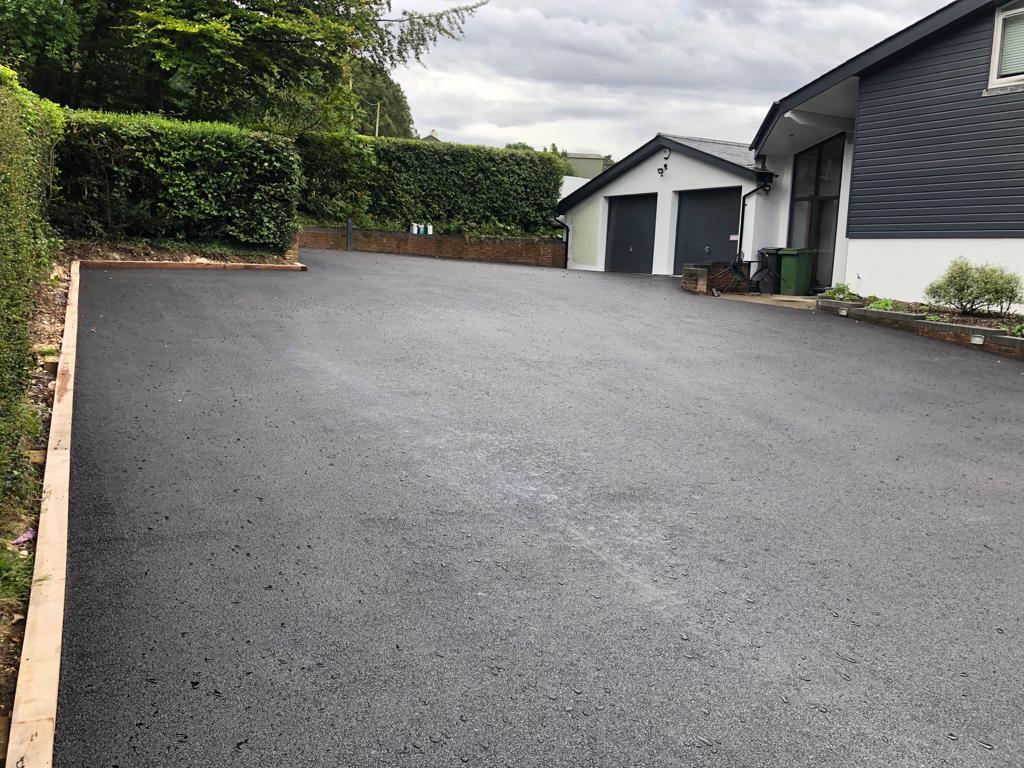
Spray & seal bitumen can provide a durable wearing surface for roads, driveways and accessways, but the quality of the finished result depends heavily on the condition of the pavement underneath. Applying a new seal over existing potholes does not remove the weakness that caused them. In many cases, those defects will continue affecting the pavement after the new surface has been applied.
For property owners and businesses in Cowra, NSW, proper preparation is therefore an essential part of spray & seal work. Cowra Road Tek assesses existing pavement conditions before sealing so that potholes, unstable areas and other defects can be addressed rather than simply covered.
Spray & Seal Is a Surface Treatment, Not a Pothole Repair
Spray & seal is created by spraying a bituminous binder over a prepared pavement before spreading aggregate across the surface and rolling it into place.
This produces a sealed, textured wearing surface that can help protect the pavement and provide reliable vehicle access.
However, spray & seal is not designed to fill deep depressions or reconstruct failed pavement underneath.
If a pothole is present before sealing, the damaged area should first be investigated and repaired. Otherwise, the new bitumen and aggregate will be placed over a section that is already deteriorating.
Potholes Can Indicate Weakness Beneath the Surface
The visible hole may only represent part of the damage.
Potholes commonly develop after the pavement surface loses integrity and repeated vehicle loads begin removing material. Water entering through cracks or damaged sections can also affect the supporting pavement underneath.
Before spray & seal application, a pothole should therefore be assessed for:
- Loose or broken pavement material
- Weakness underneath the surface
- Water penetration
- Surrounding cracking
- Settlement or rutting
- Drainage problems
- Deterioration extending beyond the visible hole
Repairing these conditions provides a more appropriate foundation for the new sealed surface.
A New Seal Cannot Stabilise a Failed Base
One of the most important reasons for repairing potholes first is that spray & seal relies on a stable supporting pavement.
If the material beneath a pothole has become soft, loose or displaced, applying bitumen and aggregate over the top will not restore the missing structural support.
Traffic will continue applying pressure to the weakened area. Movement underneath can then affect the newly sealed surface, potentially causing deformation or renewed deterioration.
Where the base has failed, the affected section may require deeper preparation before sealing can proceed.
Potholes Prevent a Consistent Finished Surface
Successful spray & seal application requires a reasonably uniform and properly prepared pavement.
A pothole creates an obvious interruption in that profile. If it is not repaired, the depression remains part of the road shape even after the surface treatment is applied.
This can affect:
- Surface consistency
- Vehicle movement
- Water runoff
- Aggregate distribution
- Overall pavement performance
Preparing and levelling damaged sections before sealing allows the finished treatment to follow a more consistent road profile.
Standing Water Can Make the Problem Worse
Potholes naturally create low areas where rainfall can collect.
This is more than an inconvenience. Persistent water can enter damaged pavement and contribute to further deterioration, particularly where cracks or loose material provide pathways into the supporting layers.
If a pothole is sealed without correcting the depression and its underlying cause, water may continue collecting in the same location.
Before spray & seal work begins, it is important to consider whether the pothole has developed because of a wider drainage problem.
Drainage Should Be Corrected During Preparation
Good pavement preparation involves looking beyond individual holes.
If water repeatedly flows towards a damaged section, simply repairing the pothole may not prevent it from returning. Surface levels, crossfalls and drainage pathways may also need attention.
Professional preparation can help establish a road profile that encourages water to move away from traffic areas rather than collecting on the pavement.
Repairing Potholes Helps Prevent Early Failure of the New Surface
A freshly sealed road should not immediately be dependent on areas that were already failing before the work began.
If potholes are ignored, repeated traffic can continue disturbing the weak sections underneath. The new surface may then begin showing defects much earlier in those locations than across the surrounding pavement.
Repairing potholes beforehand helps create more consistent support for the spray & seal treatment.
This is particularly important where potholes occur in:
- Regular wheel paths
- Vehicle entrances
- Turning areas
- Braking zones
- Sections carrying repeated traffic
These locations already experience concentrated pavement stress, making sound preparation especially important.
Recurring Potholes Need More Than Another Quick Fill
A pothole that repeatedly develops in the same place deserves closer investigation before sealing.
Recurring failure may indicate:
- An unstable pavement base
- Persistent water penetration
- Localised settlement
- Inadequate drainage
- Insufficient previous preparation
- Concentrated vehicle loading
Simply filling the depression and immediately sealing over it may leave the underlying cause unresolved.
The repair should extend far enough to remove or correct unstable material so that the new surface is supported properly.
What Does Pothole Preparation Involve?
The exact repair process depends on the depth and condition of the damaged area.
A professional contractor will first assess whether deterioration is limited to the surface or extends into the supporting pavement.
Preparation may involve:
- Removing loose and broken material
- Cleaning the damaged section
- Excavating unstable pavement where required
- Rebuilding affected supporting layers
- Compacting replacement material
- Restoring the correct road level
- Correcting nearby drainage issues
- Preparing the repaired area for sealing
The objective is not simply to make the pothole disappear. It is to create a stable and appropriately shaped pavement before spray & seal is applied.
Grading May Also Be Needed Before Spray & Seal
Potholes are often accompanied by other surface irregularities such as wheel ruts, corrugations and depressions.
Where the overall road profile has deteriorated, grading may be required as part of the preparation.
Professional grading can help:
- Restore appropriate road shape
- Correct minor surface irregularities
- Improve surface falls
- Redistribute suitable pavement material
- Establish better drainage
- Prepare the road for sealing
This allows pothole repairs to form part of a broader pavement preparation process rather than being treated in isolation.
Does Every Pothole Mean the Road Needs Reconstruction?
No. A small number of localised potholes does not automatically mean the entire road requires reconstruction.
If the surrounding pavement remains stable, individual failed areas can often be repaired before the surface is prepared for spray & seal.
More extensive work may be required when potholes are accompanied by:
- Deep and widespread rutting
- Major settlement
- Numerous soft areas
- Extensive pavement movement
- Severe drainage problems
- Widespread base deterioration
In these situations, the condition of the pavement needs to be addressed before deciding whether spray & seal is appropriate.
The Whole Road Should Be Assessed Before Sealing
Focusing only on the most obvious potholes can mean other developing problems are overlooked.
Before spray & seal application, it is useful to assess the complete pavement for cracking, low areas, drainage problems, loose material, edge deterioration and structural weakness.
This allows repairs and preparation to be completed together, creating a more suitable platform for the final treatment.
Why Professional Preparation Adds Value
Much of the work that determines the quality of a spray & seal surface happens before the bitumen is sprayed.
The completed road may only show the aggregate wearing surface, but its performance depends on the condition and preparation of everything underneath.
Professional preparation helps ensure that:
- Existing failures are not simply hidden
- Potholes receive appropriate repairs
- Unstable sections are identified
- Surface levels are restored
- Drainage is considered
- The pavement is suitable for the intended traffic
- The seal is applied over a properly prepared surface
Taking this approach helps the finished treatment perform as part of a complete pavement system.
Conclusion
Potholes should be repaired before spray & seal application because a new surface treatment cannot correct unstable pavement underneath. Sealing directly over potholes can leave depressions, drainage problems and weakened base material unresolved, allowing deterioration to continue beneath the new surface.
Proper preparation involves assessing why the potholes formed, removing unstable material where necessary, restoring pavement levels and addressing drainage or broader surface defects before sealing begins.
For property owners and businesses in Cowra, NSW, Cowra Road Tek provides professional pothole repairs, pavement preparation and spray & seal surfacing based on existing road conditions. If your road has potholes and you are considering a new spray & seal surface, arranging an assessment first can help ensure the pavement is properly prepared for the work ahead.
Call us on: 02 5926 2530
Click here to find out more about Cowra Road Tek
Click here to complete our contact form and see how we can help with your Asphalt and Bitumen Surfacing needs.